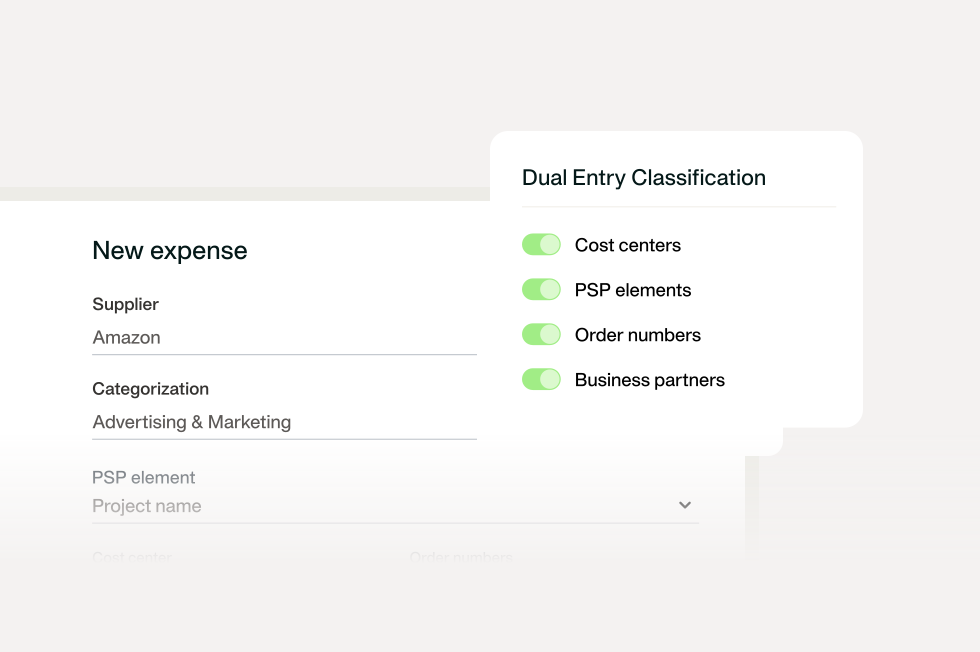
Why connect spend management to DualEntry
29 Sept 20269 min


On the face of it, group business travel seems so simple, but as you start planning and notice all the moving parts, it becomes financially complex. Here’s how you can keep each traveller compliant and remove the month-end clean-up.

By submitting this form, you agree to receive emails about our products and services per our Privacy Policy.
Although organising a group trip on the surface seems simple enough, it’s possible that every single person going on the trip has different card limits, different line manager approval, or different policy limits.
So, booking hotel rooms or reserving seats is the easy bit; the hard bit is keeping each person travel compliant and accounted for from the beginning. This guide shows you how it’s possible without the month-end headache.
A group business trip is when multiple employees travel together to the same destination; maybe they’re attending an industry conference or meeting with a client. But as soon as this trip crosses multiple departments i.e. a sales manager and a financial controller are both attending, or the team members belong to different legal entities, the financial complexity begins.
Although the employees are travelling to the same destination, you can’t treat it as a single booking. You can’t overlook individual traveller permissions (i.e. policy limits and financial ownership). If you do ignore them, you ensure compliant booking is impossible and systemic failure points show up quickly:
These perfectly highlight why companies need central coordination at the macro level, but adhere to strict traveller control for each employee at the micro level.
Orchestrate business travel, end-to-end. Meet the AI Travel Agent

By centralising group travel, you don’t restrict choice, but instead reduce the admin headache that typically comes with it, all while delivering real-time data to finance teams.
Here are five real-world benefits:
Using an automated system helps enforce each individual’s specific policy limits. This means you completely avoid the need to force the group onto a poorly fitting policy.
Before you process payment, you need to know that all expenses are allocated to the correct traveller, and that’s what happens with centralised group travel. The system allocates expenses, fares, and taxes to not only the right traveller, but the correct cost centre, legal entity, or client project before you spend any money.
Manual messaging threads cause fragmented communication, which is something you really don’t need when travelling. But by centralising everything, you can effortlessly share itineraries with all parties, provide real-time trip visibility, and receive direct traveller confirmation.
With centralised booking records and automated invoices, you can reduce fragmented reimbursement requests and stray receipts; making everyone’s job much more straightforward.
It’s not just about the time your team is saving on manual tasks, it’s how this transition impacts bottom line. Because by consolidating your bookings, you can access better supplier terms, bulk discounts, and corporate rates, which is a clear win for any finance team.
Different operating models offer different benefits; some offer better flexibility, inventory access, or superior expense control.
| Approach | Best suited to | Where it creates friction |
|---|---|---|
| Consumer travel sites & personal cards | One-off trips and very small teams | Lack of pre-approval controls, heavy personal financial outlay, high reimbursement volume, and inconsistent receipt evidence. |
| Travel management company (TMC) | Complex, high-touch, enterprise travel itineraries | Changes can depend on agent availability; booking sits separately from real-time corporate card and expense approval workflows |
| Standalone travel tool | Organisations needing broad inventory and high self-service volume | Travel inventory and spend management remain in disconnected systems, creating a heavy manual reconciliation burden for finance. |
| Spend-native travel platform (like Payhawk) | Teams wanting travel fully integrated with approvals, cards, and accounting | May feature narrower boutique inventory or less specialised offline agent support than established enterprise TMCs. |
To plan a seamless group business trip, you need structure using a step-by-step workflow that aligns both travel logistics and financial governance before you commit to anything:
Payhawk integrates corporate travel directly into your spend management infrastructure. Utilising the Payhawk Travel AI Agent, teams can seamlessly search, compare, and book policy-compliant flights and hotels through the conversational interface and maintain full financial visibility.
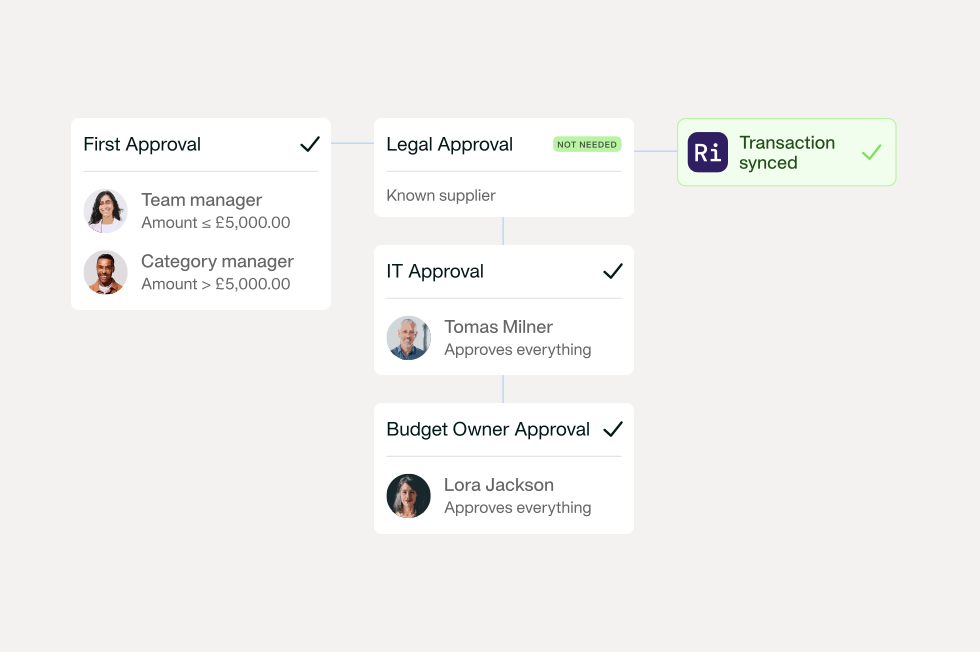
Payhawk's Group booking flow supports up to 10 travellers, with all individual traveller limits adhered to. The smart system ensures every traveller operates under their dedicated travel policy, approval workflow, expense line item, and corporate card limit. All this is linked under one trip umbrella.
Within a Group booking, if there's a problem with an individual booking, e.g. it’s flagged as out-of-policy or the card declines, the failure is isolated to that one traveller. The booker will then receive immediate notification and a clear rebooking path for that traveller. This process protects the bookings for the rest of the group, so no one suffers delays or the need to rebook.
After booking approval, virtual and/or physical card allowances automatically activate for each traveller on their Payhawk card. All ground expenses attach directly to the correct traveller’s report and cost centre. This means less reallocation, fewer out-of-pocket reimbursement claims, and automatic receipt matching at month-end.
Finance teams should spend month-end reviewing strategic exceptions instead of having to piece together chaotic group invoices. And that’s exactly what an effective group travel process does. It protects the traveller experience by enforcing strict individual travel policies per traveller and keeps individual booking records while automating expense capture.
If group travel is currently spread across inboxes, spreadsheets, and personal cards, Group booking pulls it into the same place as your company cards, expenses, and finance workflows. Book a demo to see how it would work for your team.
Boris is a seasoned product leader with a diverse background in launching financial products and building innovative payment programs. Currently, he leads the Spend Management product area, where he is focused on revolutionising the travel management space with an enterprise-ready AI Travel Agent. Passionate about blending technology and user-centric design, Boris is dedicated to creating seamless, intelligent solutions that redefine the way businesses manage travel and expenses.