Procurement automation: five processes you should have automated yesterday
28 Oct 20268 min
Payhawk raises $280M at a $2B valuation as it evolves into the global Finance OS for the AI era


Finance software handles the data entry. The decisions behind it still happen by hand, because the rules for coding an expense, checking a policy or approving a supplier were never written anywhere a system could use them. So the same judgement gets applied again on every transaction, usually once the money has gone. Learn what that costs, and what changes when each decision is captured once.

By submitting this form, you agree to receive emails about our products and services per our Privacy Policy.
Automation and AI were meant to give finance more control. Yet most teams still handle the admin manually. They correct what the system got wrong, approve hundreds of small expenses, chase suppliers for documents and bank details, reconcile between tools, and catch out-of-policy purchases weeks after they happened.
Anna Sidzhimova, Product Marketing Manager for Procurement at Payhawk, hears the same story from the finance teams she talks to. A marketing manager wants a new agency to start on Monday. The agency sends its paperwork, the marketing manager forwards it to finance, and finance sends it back with a list of what is missing. Two weeks later the thread has the requester, the supplier, AP and sometimes legal on it, and the agency has already started. Anna has watched it play out often enough to know how it ends:
Quite often the business cannot afford to wait any longer, so the first invoice gets paid before the paperwork is complete, just this one time. The slow process ends up creating exactly the risk it was meant to prevent.
Nothing in that story is a software problem. The company knows which documents it wants and who has to see them. The knowledge sits with finance, so each new supplier gets checked by hand against a list nobody has written down.
According to Payhawk's Tools Fallacy report, twenty-five years of finance software have automated everything except the work. Martin Reindl, General Manager and SVP Customer Success at Payhawk, traces the gap back to how each wave of software was built:
The tools arrived. The rules never did. Every wave of software took over the typing and handed the thinking straight back, so a person stayed in the loop to supply what the system was never told.
Finance leaders have a name for the people filling those gaps. In FERF's 2026 Finance Architecture Survey, 36% of organisations said their directors, controllers and senior managers spend between a third and half of their time manually intervening in data, acting as human middleware between systems that don't talk to each other.
At a smaller company it shows up as a whole role rather than a share of someone's week. Nick Millard, VP Finance at GDS Group, describes the version his team lived with before they took the coding and chasing off one person's desk: "Before Payhawk it used to be one person's full-time job to chase receipts, code up credit card statements to the P&L and manage the costs and credit cards."
A full-time job, created by software that was sold as removing work.
Murilo Paulucci
"A lot of the corrections finance teams make are ones they've made before, for the same supplier. The right answer lives in someone's head rather than in the system, so nothing the team fixes on Tuesday changes what arrives on Wednesday."

The smallest decision finance makes is a good place to start. Murilo Paulucci, Product Marketing Manager for Cards and Expenses, describes it:
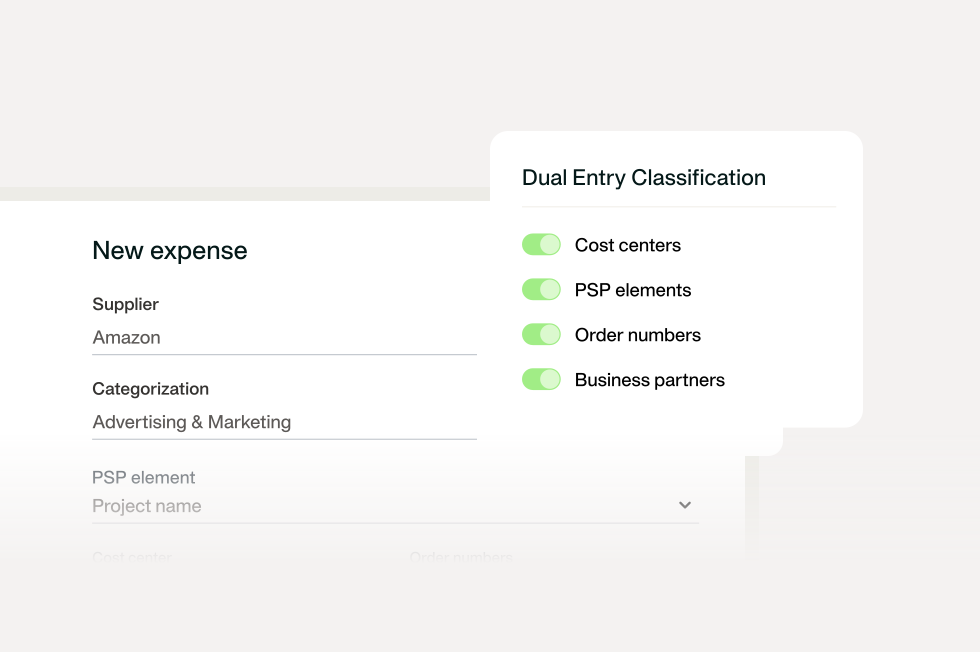
It's mostly the category, then the cost centre and the project. The receipt says where the money was spent, not what it was for or how the company books it, so someone has to know.
Someone does know. The monthly design software subscription is always software, charged to marketing. That was settled long ago, and what happens on the fourth of every month is a person applying it again. Here is why it keeps returning, according to Murilo:
It keeps coming back because the correction lives in someone's head, not in the system. They know the right answer and have applied it a hundred times, but nothing they fix on Tuesday changes what arrives on Wednesday.
Every other part of finance has its own version, with a different kind of judgement in each. Bringing on a new supplier turns into the same problem. Anna describes the trail:
A new supplier's details end up in three places before the first payment goes out: the email thread where the supplier sent them, a spreadsheet someone in the business filled in, and finally the ERP, where someone in AP typed them in by hand. Nobody really owns what happens between those steps.
Booking a hotel is the same decision again, with a price instead of a code. Raquel Orejas, Product Marketing Manager for Travel, describes the guesswork:
An approver signing off a hotel booking has nothing to compare the price to except their own guess. A fair rate in Paris isn't a fair rate in Barcelona, so nobody can say what "too expensive" even means.
Different calls in different corners of finance, each one held by a person and none of them held by a system.
Nothing applies a rule that lives in a person. Someone has to notice, and noticing happens after the fact. Murilo walks through a sequence any finance team would recognise:
The policy says dinners are capped at €50 a head, but the policy is a PDF the employee only saw at onboarding. Their manager signs it off within a couple of days, scrolling through twenty expenses on their phone between meetings, so the €140 dinner only gets noticed when finance reviews it. By then the card's been charged and the employee has moved on.
Finance can send it back, ask for a reason, or let it go, and it usually lets it go, because chasing means going back and forth with the employee, getting the money refunded and fixing the books, sometimes after the month has closed.
An overspent dinner is the cheap version. Ask any controller about supplier bank details and you’ll hear the same rule: nobody changes them without a second person approving. Few tools enforce it. Among all the permissions finance hands out, Ralitsa Germanova, Product Marketing Manager for Accounts Payable, points at one:
The most dangerous of those rights isn't approving invoices. It's changing a supplier's bank details. In most spend and AP tools, one admin can update a supplier's bank account alone, and the change takes effect immediately.
As Ralitsa puts it, the real fix is a second sign-off before the change takes effect, not a review afterwards.
Ralitsa Germanova
"When I speak with finance controllers and treasury leads, one of the first control questions they ask is: if a supplier changes its bank details, who can make the change, and does anyone have to approve it? The answer they expect is clear: nobody should be able to change bank details without someone else approving it."

Write the coding rule down and the subscription arrives coded. Write the policy down as a check and the €140 dinner gets caught before the card is charged. Write the supplier requirements down and the agency clears onboarding without a two-week email thread. The repetition and the late checks have the same cause, so they fall away together.
Capturing a decision is not the same as documenting it. The spend policy was already documented, and it changed nothing, because no document reads itself at the moment a card gets used. A captured decision is one a system can act on without being asked. The supplier that always codes to software codes to software. The dinner above the cap gets stopped at the point of spend rather than flagged at review. The bank detail change waits for a second approver before it takes effect.
What follows is quieter than it sounds. A correction written into the rules stops coming back, so the hundred applications become one. The check moves to the point where the money can still be stopped, which turns an awkward conversation in week three into a declined transaction nobody has to chase. And the knowledge stops being a single point of failure, because the rule holds during the week its author is on leave.
Capturing a decision takes somebody who knows what the right answer is. Murilo looks at the people already applying it by hand:
As for the people doing the coding today, I'd argue they're the best candidates for writing the rules. They're the ones who know, for example, that "Geography" means where the money was spent, not where the supplier is based, and that the sales team's dinners are treated differently. That knowledge is exactly what the rules need.
Three jobs do not move. Setting the rules, so one decision holds for every transaction that matches it. Reviewing the exceptions rather than every line. Signing off, with sight of every entity rather than one at a time. Each one is a judgement about what the company should do, which is why it stays with the people accountable for the answer.
One thing worth doing this week, with no budget and no vendor: export last month's corrected expenses and sort them by supplier. Every supplier appearing more than once is a decision the company already made and has never recorded.
That is the thinking behind zero-touch finance, and behind the Winter '26 Edition. The routine work between a purchase and the books gets done inside rules finance has approved, and only the exceptions reach a person. Payhawk learns how your team codes and suggests rules, and nothing goes live until finance confirms it. Agents then apply your policies across expenses, invoices, purchases and trips before the money moves. The edition launches on 1 December. Register for the showcase on 15 December to see it in action.
Zhenya is a creative content strategist specialising in crafting SEO-driven narratives across tech, SaaS, and B2B. At Payhawk, she blends storytelling, data, and product insight to create content that helps finance teams and drives measurable impact.